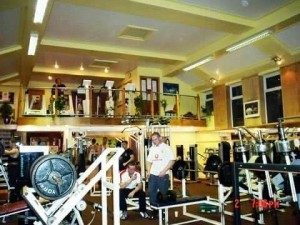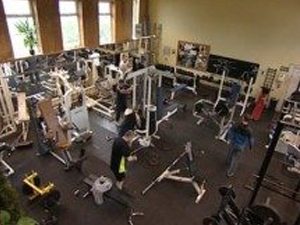
Greg Davis from talking about UEW, the Inner City Cultural Centre

United Estates as an Inner City Cultural Centre including street based conflict resolution and mediation Service.
A good cultural centre offers an environment and facilities that are useful and relevant (speaks the local language) to that culture… most importantly gives its patrons a sense of belonging and recognises the importance of indigenous, socially accepted local leadership.
-
The United Estates recognises the importance of identifying and engaging with real local leaders
-
Local leaders give access and open lines of communication to the real hard to reach youth (AKA ‘the problem’, feral youth, the ASBO generation, NEETS, yobs, gangs, criminals etc)
-
The United Estates combines these two great overlooked, excluded social elements to create a dynamic force for good – locally recognised estates leaders (think ‘steering wheel’) and ‘Hard to Reach youth gangs’ (think ‘really powerful engine’.) combing the two social groups offers massive energy, creative genius, local knowledge, positive direction.
-
The United Estates uses (taps into) the energy and creativity that is needed to produce and develop a youth (street) gang.
-
Using this street level genius energy it builds a youth club for kids that don’t go to youth clubs
-
This in turn provides a platform converting that energy from ‘gang culture’ into ‘positive social and community enterprise’.
-
Our building is full of gangs. Gangs of window cleaners, gangs of gardeners, car washers, security guards, therapists, dance teachers, musicians, film makers and boxers etc.
UEW has pioneered the creation and development of Inner City Cultural Centre (IC3)
Developing related entities such as ‘Street Based Employment Agency’ (eg Music for Cities)
Devising platforms for street based discussion, (eg Street Peace un-Conferences)
Creating and developing community enterprise that can be run exclusively by local people (eg Manchester Urban Collective.)
Important Bit
We should also include, if we want to be a real, valid inner city Cultural centre the importance; the necessity of a Street Based Conflict Resolution and Mediation Service.
Preamble.
For many, inner city areas have become a mosaic of ugliness, sadness, depression, ill health with fear of violence becoming an every day occurrence; a way of life.
There is potential for flash point conflict situations every second of every minute of every day on all of our tough, deprived inner city estates.
Think: When was the last time you took a ride in a stolen car, was involved in a street fight, broke into a neighbour’s house, mugged someone on the street or shoplifted to pay for your next toke of weed…
For some kids this isn’t a sometimes occupation or once in a while occurrence – this is their every day life.
Inner City Character traits: Poor education, poor housing, poor families, low moral, low hope, low expectation, absence of positive role models, social anomie.
Inner city people traits: hostile, volatile, argumentative, aggressive, poorly educated, absent morals,
Just like the notional crack that appears in the ceiling – you can choose to ignore it; you can divert people’s attention away from the problem/crack. You can paper over it, you can paint over it – you can simply tell people over and over again “the crack isn’t there…”
The problems are there, they aren’t going to fix themselves and left alone they will get worse.
If you don’t want any of these problems the answer is clear. Don’t live on a tough inner city estate
For those that don’t have the luxury of choice, ie. the rest of us, we have just three choices:
-
Do nothing
-
Wait for someone else to do something
-
Do something.
The above should establish the need for a street based conflict resolution and mediation service as a very valuable, necessary and credible part of developing an inner city cultural centre – and the need for calmer, smoother running, happier, healthier communities.
Case Studies:
What no high Court judge knows about living on a tough inner city estate… Is that if I look at someone ‘funny’… I’m potentially dead. That simple. Armed with this information, if I get involved in any (every) street based confrontation I will fight as if fighting for my life. Again… simple.
-
The Murder of Damon Semple.
Damon was a personal friend, member of UEW and frequent user of our gymnasium. Damon became embroiled in a family dispute. The rights and wrongs, who said what, who did this or that were relayed to us over a few days by Damon. A week into the conflict Damon was involved in a street fight, he was stabbed and died form his wounds the same night.
No one was ever charged with the murder and the feeling locally is that this is out of convenience for the police; Damon was ‘just’ another inner city kid from ‘just’ another tough family. Case closed.
This case could (SHOULD) have been resolved.
-
Gary gets life.
Gary is a close personal friend, ex-member of UEW and (ex-)frequent user of our gymnasium. Some four years ago Gary was walking home around midnight when a fight broke out on the other side of the street between a man and his lady friend. The man punched his female acquaintance square in the face, knocking her to the floor, then proceeded to kick her about the body.
Gary intervened. The man pulled out a knife and lunged at Gary.
Gary disarmed the man; retrieving the knife proceeded to stab the man in the neck, head and body. The man died from his wounds. Gary received life imprisonment.
The ‘lady friend’ advised that their original fight was over a cigarette.
A locally based centre offering street based conflict resolution and mediation services would be highly beneficial in any tough inner city area. Especially in Wythenshawe.
UEW is a trusted local social enterprise, we are entirely staffed by local people, we have our ear to the ground and, all be it on an informal level we have become expert in gang intervention and conflict resolution – more out of necessity than desire. I think the time has come for more formal training in these vitally important areas. Quite often, we are the first port of call for ‘warring’ factions on the estate, especially from young people and those involved in gang culture or any form of criminality, due to the strong local distrust of the police and authorities.
There is the possibility for a real irony to develop here:
-
The police are loathe to publish or even discuss the real extent of violent crime in Wythenshawe – this is for a variety of reasons. If we can not talk about a problem, how can we ever begin to solve it? In other words ask the police if a local body like UEW should specialise in conflict management and mediation and they will probably play down the need for such a service – wouldn’t look good on their CV. It is of interest to note that during the Summer riots of 2011, when London, Birmingham, then Manchester, then Salford slipped into civil disorder the next logical geographical area should have been Wythenshawe… But it wasn’t. Riots to occur in tough deprived inner city areas need ‘permission givers’. The permission givers in Wythenshawe did not give their permission. In Wythenshawe the permission givers are NOT the police.
-
The police are loathe to ‘admit’ that gangs, youth gangs and the problems of ‘feral youth’ (not my phraseology) actually exist in Wythenshawe. Here’s an Acid Test for any area that has trouble ‘deciding’ if it has a gang problem – ‘Are there drugs in that are? If the answer is ‘Yes’, then you have gangs.’ The ‘need’ for a street based conflict resolution and mediation service would be diminished if we couldn’t prove we had a youth gang problem.
-
If a (Street Based) conflict resolution and mediation service was to be set up in Wythenshawe it would almost certainly be set up by ‘middle class’ professionals. All regeneration schemes are staffed exclusively by middle class professionals – quite clearly ‘middle class solutions are not solving working class problems’. This simple fact has never prevented regeneration schemes dreaming up middle class ideas, thoughts, solutions and delivery into poor, working class areas – probably explains why Wythenshawe is full of graffiti’d mosaics, failed allotment projects and bread making courses that attract no one. Any ‘official’ conflict resolution course set up in this way would be certainly be regarded with suspicion by local people; an un valid, not credible attempt by the authorities to shut people up?
-
Conflict resolution and mediation is seen as a ‘global’ exercise – rarely (never?) have I seen it associated or employed between warring youth gangs at street level on a tough inner city estate. It is very much an unknown commodity at street level and thus could be developed organically in a very real and positive way.
I would very much like the opportunity to discuss the possibility of developing a street based conflict resolution and mediation service at the United Estates. I think there is a profound need for such a service.
Foot Note.
In 2007 UEW held a ‘Gangs Conference’, under the banner of ‘Street Peace’. Senior gang members from across the UK attended the two day conference held inside UEW Gym (Benchill, Wythenshawe). Gang members arrived from London, Birmingham, Liverpool, Nottingham, Sheffield and of course, Manchester. The event was sponsored by Joseph Rowntree and reports can be downloaded from the JRF website (community leaders’ response to street crime, Jenny Lynn, Researcher JRF 2007). The event looked at long term solutions to the problems associated with gang culture, youth gangs, street crime etc. A conference; a room full of experts.
UEW as an organisation has long reach and much in the way of trust, social mobility and credibility, we are a wholly trusted enterprise at street level and in a social area that is wholly steeped in a strong working class ‘anti-grass culture’ we find we are used as a sounding board for problems extremely frequently. We have been involved and are involved on an on going basis in informal street level conflict resolution and mediation.
In developing a real inner city cultural centre I think it will be important to include this service as an integral part of our work.
Greg Davis.
June 2014.
Gallery
-
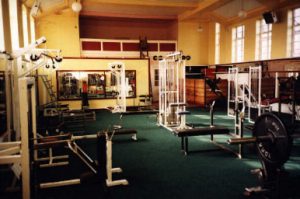
- The middle
-
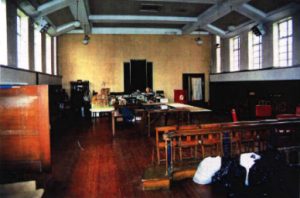
- In the beginning